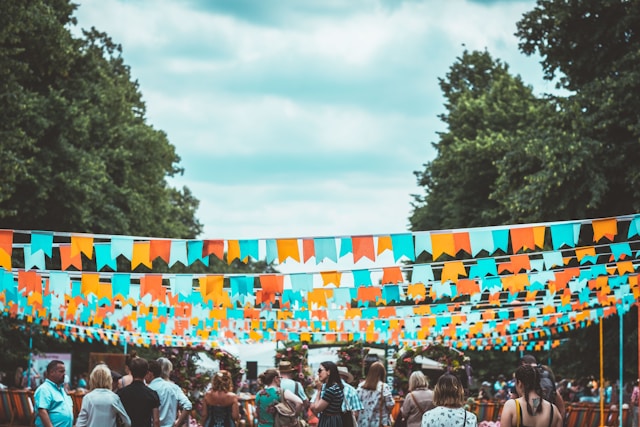
Unchanged since the 1920s, the English fête hosted across villages is a social institution unlike any other. This country fair, part a celebration of village community and part a sale of locally made produce, follows the ‘it’s the little things that count’ mentality.
Given the fact that this tradition has remained unbroken for over a century, it’s safe to say that the people of the UK enjoy opportunities to connect and participate in social life. As per recent statistics, 66% of adults participated in some form of volunteering or civic engagement in 2024.
Village fêtes bring together neighbours, support worthwhile causes, and serve as a medium for showcasing local talent. With that said, not every fête indeed leaves the same impression. Some become annual highlights that residents eagerly look forward to. On the other hand, others struggle to generate the same enthusiasm.
This difference boils down to a handful of elements that determine visitor experience from the beginning to the end. Let’s understand those key elements in this article. We will discuss four things that the best village fêtes have in common.
There’s Something for All Ages to Enjoy
The best village fêtes have their way of bringing together people who might not normally spend a day at the same event. Yes, the diversity of teenagers, children, parents, grandparents, and everyone in between matters.
In their American morning talk show, Live with Kelly and Ripa, actress and talk show host Kelly Ripa said that intergenerational friendships “offer countless benefits. We are big fans of intergenerational friendships.” She continued by saying. “I really believe that if you want to learn a lot, have friendships in different generations.”
Can the same sentiment not carry forward to a village fête? Absolutely, and this is why the best ones make every generation feel included. To make this happen, such fêtes often include:
- Face painting and games for children
- Craft stalls and local artisan displays
- Live music and performances
- Food and drink vendors
- Community competitions
- Heritage exhibits or local history displays
- Comfortable seating areas for catching up with neighbours
This is important because a family day out works best when everyone has something to look forward to. Getting this balance right means visitors will stay longer and leave feeling that the event genuinely was worth their time.
The Atmosphere Is Safe and Welcoming
Locals want to enjoy their village fête without any fears or worries of what might go wrong. Now, this sense of ease does not come by accident. Careful planning and thoughtful measures are required to help everyone feel comfortable from the moment they arrive.
Safety is part of that experience, but it should not take away from the fun. Visitors want to feel secure and looked after without having surveillance systems staring them in the face all the time. At larger or busier events, organisers often combine different layers of planning, both visible and behind the scenes. They may be as follows:
- Friendly volunteers greeting visitors at entry points
- Well-managed queues to avoid congestion
- Emergency plans that are in place but not intrusive
- Easy-to-navigate layout that enables people to move around seamlessly
In many cases, modern screening technologies are also used to support this balance. For instance, AWDS or Advanced Weapon Detection System may be employed to identify potential threats during entry. OPENGATE AWDS can strengthen safety while keeping the arrival flow calm and efficient.
As GXC Inc. explains, Opengate metal detectors are specifically engineered to detect mass casualty metal threats while screening individuals and belongings in transit. Now, indeed, village fêtes are modest community-led events, but if their scale is large, such measures may be necessary to ensure the atmosphere is safe and welcoming.
Family Traditions Are Balanced With Fresh Ideas
Although it doesn’t seem so, what’s truly challenging is to make an English fête both a tradition and a living community event. Many organisers lean too much towards tradition, which makes the fête feel predictable. Visitors may feel like they’ve seen it all before, and younger generations may struggle to stay excited.
On the other end of the spectrum, chasing novelty can make the fête lose its ‘local’ identity. Long-standing attendees may not be able to connect. Plus, the event itself may feel generic or commercial. Balance is what keeps the fête exhilarating without diluting the community connection.
First, let’s look at what the data says regarding a global pattern in cultural life. As per the World Cities Culture Report 2025, culture in cities worldwide is shaped by both preservation and innovation. Over 125 case studies have shown how cities are combining heritage-based traditions with new cultural programming to strengthen engagement and participation.
In the same way, the most successful village fêtes strike a balance between the old and the new. Such a balance usually shows up in the way they are planned, as follows:
- Traditional shows on local produce, baking contests, and village games are organised.
- There are familiar community stalls run by local groups year after year.
- Many of the performers remain the same each year.
- New food vendors or local business pop-ups are allowed based on the season.
- Fresh entertainment is also given space in the form of youth artists.
- Small modern touches may be found everywhere, such as updated layouts, signage, or activities.
The Fun Flows From Start to Finish Without Rigidity
If one cannot enjoy a village fête with ease, then what’s the point, right? The best ones ensure that the visitor experience is as seamless as it is safe, from start to finish. There is a clear sense of order, but it never feels too strict or controlling.
The layout and organisation are such that everything flows naturally, allowing visitors to explore, participate, and relax at their own pace. This is important because people should know where to go and how to move around the event without confusion.
At the same time, the best fêtes do not feel timed down to the minute. In other words, they leave room for spontaneity, wandering, and those little moments that make the day feel special. Again, the balance may be observed in the way the event is set up. Smooth flow may cover the following:
- Clear entrances and exits to ensure people arrive and leave comfortably
- Simple signage to help visitors find stalls and activities
- A loose layout that keeps similar attractions grouped together
- Activities running at different times to ensure there are no overcrowding issues
- Open spaces for people to sit, relax, and talk
- Volunteers who guide visitors during moments when they need help
Now, the distinguishing factor lies in how visitors feel. If they feel like they’re being rushed from one spot to the next, their experience won’t be pleasant. It’s about allowing everyone to explore at their own pace without losing a sense of order.
FAQs
What makes a village fête successful?
A successful village fête strikes a balance between tradition and innovation. This means it includes a mix of traditional community events and fresh activities that keep visitors of all ages engaged. Successful fêtes are also well-organised without any rigidity, so everyone can enjoy at their own pace.
How do village fêtes create a sense of community?
Village fêtes bring people together in a shared space where they can interact, volunteer, and support local causes. There are opportunities for residents of different ages and backgrounds to connect and develop a stronger sense of belonging within the community.
Why is event planning important for village fêtes?
Good planning is the key to ensuring visitors have an enjoyable experience. Clear signage, proper crowd flow, and effective organisation reduce confusion. The best village fêtes combine this structure with enough flexibility for visitors to decide how they spend their time.
Community Events in Numbers
| UK adults who participated in some form of volunteering or civic engagement in 2024 | 66% |
| 2025 World Cities Culture Report on over 125 case studies | Cities are combining heritage-based traditions with new cultural programming to strengthen engagement and participation |
| World Economic Forum 2024-2025 report on world population and young leaders developing community-led projects | ● Almost half the population was under 30 years of age
● 10,000+ young leaders across 500+ city hubs delivered more than 800 community-led projects |
English fêtes may appear small and local, but they are a reflection of a much deeper truth about how communities function at their best. The World Economic Forum (WEF) mentioned in a 2024-2025 report that almost half of the world’s population was under 30 at the time.
Interestingly, over 10,000 young leaders across 500+ city hubs had delivered more than 800 community-led projects. Together, these projects had reached 2.2 million people worldwide in a single year.
While the scale of participation is impressive, so is the power of local action. Communities thrive when people come together and share responsibility for something meaningful. The best of connections can happen in ordinary places, through ordinary people.