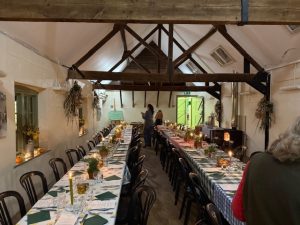
 Billed as The Hampton Supper Club, this was a delightful evening in the cosy converted milking parlour at Myrtles Courtyard, showcasing Hampton’s fabulous pasture-fed beef with chef Robin Popham and nutritionist Nicola Vaughan, who was on hand to tell us about the benefits of this beef.
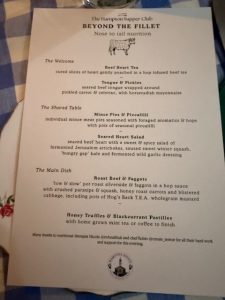
Nose to tail eating is not for everyone but we all seemed happy to give everything a try from the menu shown below. To start with, we had Beef Heart Tea, cured slices of heart gently poached in hop infused beef tea. Having never tried heart before, I was not sure what to expect but it was tender and quite pleasant, paired well with the warming broth. Tongue and Pickles saw tender slices of seared beef tongue wrapped around pickled carrots and celeriac, with a light horseradish mayonnaise. Quite moreish and popular.
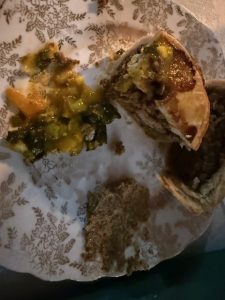
Once seated, we had some really rather fabulous Mince Pies and Piccalilli (shown below), made using various parts of the cow together with foraged aromatics and hops. These were delightful, paring very well with both the home-made piccalilli and also some wholegrain mustard, made with the local Hog’s Back T.E.A beer. Also on offer was Seared Heart Salad, with strips of the seared heart in a salad with fermented Jerusalem artichokes, soused sweet winter squash, ‘hungry gap’ kale and fermented wild garlic dressing. Interestingly, the seared heart had a taste not dissimilar to a seared piece of flank steak. It certainly did not have a taste of offal which I had expected.
The main course of Roast Beef and Faggots had beautifully tender pot roast silverside which was well paired with crushed parsnips and squash. Pot roasting is not in fashion but it should be and that cut of beef is so much cheaper! A real winter warmer.
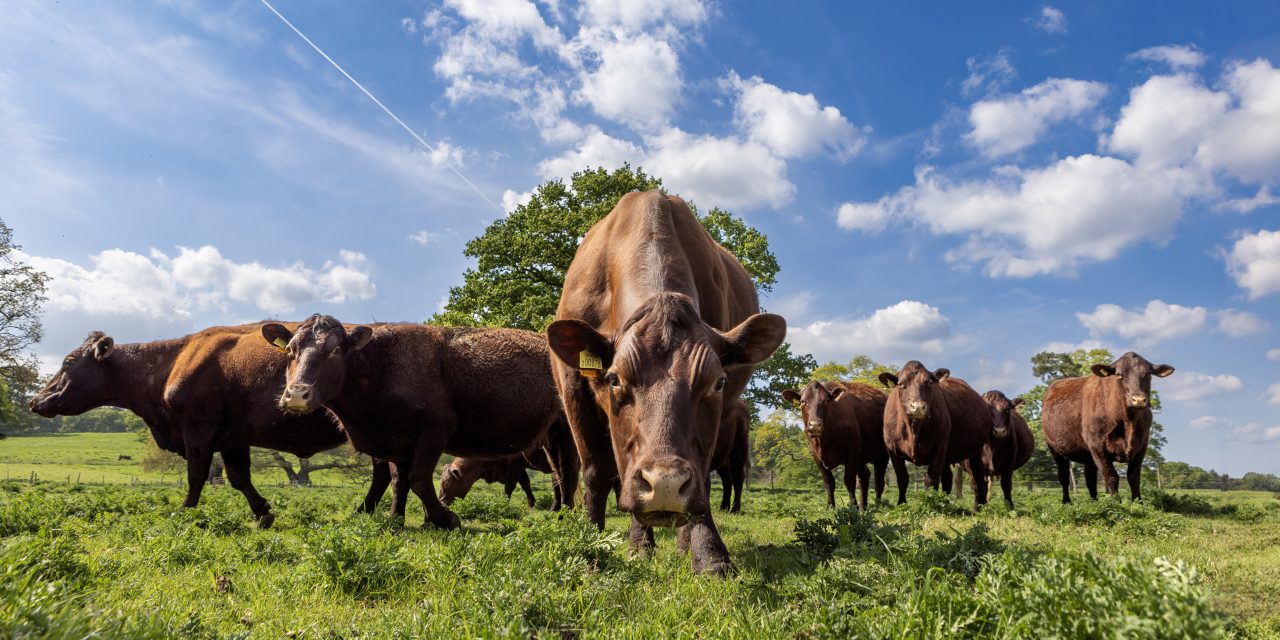
Nic spoke about the nutritional value of the beef that Hampton produces. It is ‘pasture for life’ beef, which means that it is only ever fed what is growing on the Hampton estate, sustainability in action. This means that the meat contains Omega 3 fats that are essential for health. Supermarkets may label their beef as grass fed but in reality, this means it must eat just 50% grass, the rest potentially being grain which has Omega 6 fats which are not as beneficial.
Nic’s philosophy is ‘what a cow eats becomes the cow’ and it is important to be aware of how the food that we eat is produced. Here they have a diet than means that the beef produced has the essential fats and protein that we need and has lots of Vitamin A which is good for the gut – and therefore our immunity, which is influenced by the gut.
Whilst not to everyone’s taste, offal does have a good nutrient profile which is good for us. Heart, liver and kidney used to be highly prized but have rather gone out of fashion, but they can be added to other cuts of meat and enrich the flavour of say a stew or a bolognaise without dominating. They are also quite inexpensive to buy.
I very much enjoyed my evening and learnt quite a lot. The wine was free glowing, the conversation lively and we tasted good food with some pleasant surprises. It certainly highlighted the importance of what we eat to our health and more generally to sustainability and traceability. The quality of the ingredients we consume has never been more important, so buy (and eat) wisely. It really does make a difference.
The Hampton Estate sells its beef direct to the public on its monthly ‘beef collection days’. Visit hamptonestate.co.uk to find out more.