Making wine very special

In a continuing series promoting our great local businesses, Phil Kemp visits three independent wine merchants in the area

Over thirty million British people regularly drink wine so it’s perhaps not surprising that even a quick visit to a supermarket will reveal shelves stacked high with wine, and a quick Google will almost drown you in choice. Many of us will buy a bottle or two choosing a brand that we regularly drink, or perhaps we’ll be guided by a special offer to suit our budget.

A practical approach certainly but there’s definitely something very special missing – the magic of visiting an independent wine merchant where you’ll find extraordinary choice and a passion for wine you’ll never find in a supermarket.

I decided to find out for myself by visiting three local merchants, and in so doing also dispel the myth that they are too expensive an option.

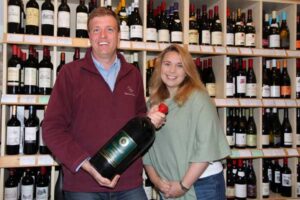
Taurus Wines was set up over fifteen years ago in an old cowshed at Whipley Manor Farm near Cranleigh. Rupert Pritchett, spurred on by his passion for the grape and hands-on experience of the wine industry, quickly turned his fledgling business into a multi-award winning wine merchant and importer. These include separate awards as Wine Merchant of the Year for French, Chilean (twice), Argentinian and a close second for New Zealand, all judged by peers within the industry.
tauruswines_230916_philkemp_3893

“We’ve even won a Sherry Merchant of the Year,” said Rupert. “And very special in a different way is that this year we won the Muddy Stilettos Award which was voted for by the general public. That was a lovely feeling to get because it’s one thing to know that your trade peers like you, but it’s totally another thing to know that customers genuinely appreciate what you do.”

Rupert undoubtedly embraces his passion with enthusiasm, which is shared equally by his wife Felicity who runs their acclaimed wine tastings. The experienced team they have built around them include their Master of Wine and wine diploma graduates.

One theme common with all three merchants is the close relationship they have with the wine producers.

“As an independent, Taurus not only has an understanding and passion for wine, as a direct importer we have a close relationship with the wineries,” said Rupert. “It’s all very well getting a spec sheet that tells you what is in the bottle, but it doesn’t bring the wine to life. What brings it to life is going to meet the winemaker and finding about their own little quirks. A good example is the winemaker that likes to start fermentation when there is a full moon because he believes it increases the sugars in the grapes. That’s biodynamic winemaking at work.”

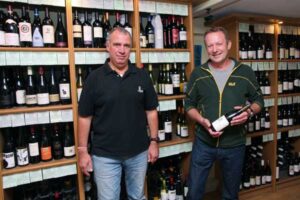
John Hodges, who has over thirty years’ experience of selling wine, established The Vineyard in Dorking twelve years ago. He chose the name, not only because the town has its own vineyard, but to emphasise just how close a connection the business has with the wineries they buy from around the world.
thevineyard_270916_philkemp_4014
When we met, John was about to fly out to South Africa on a vineyard tour to build on his relationships with the growers.

“Being an independent enables us to buy a more eclectic mix of wines and adapt more readily to people’s needs. We can provide a great variety and at all price levels adapted to our customers’ requirements. We also supply fifty pubs and restaurants and can quickly react to accommodate exactly the wines they want to offer to their customers.”

He was keen to emphasise that wine is much more than just the label on the bottle. “It is very much a product that is about the place and the people behind it. And it is about character in wine. The more aware our customers become they want to know a lot more than just the grape variety to enhance their experience.”

Simon and James Hawkins have taken a different route by specialising exclusively in English wine. The Hawkins Brothers have between them thirty or so years’ experience as publicans in West Sussex and Hampshire where their emphasis was always on using local suppliers of food and drink.

“As a publican I loved my real ales of course and the different flavours, but you have to have a really good wine list as well to provide a balance,” said Simon. “Gone are the days when you have a really small glass filled right up to the top with something very insipid. Customers want a really decent glass of wine with lots of choice including something sparkling. And buying local provided our entrée to English wine.”

hawkinswines_230916_philkemp_3937

Based in the courtyard at Secrett’s Farm Shop in Milford, Hawkins Bros. describe themselves as champions of fine English wines, a claim I don’t doubt given how energetically they’ve embraced local winemakers – right to the point where they have just launched their own vintage Brut Reserve 2013, which is available exclusively from their shop.

“It’s made from grapes harvested in 2013 on the Hog’s Back and it’s a unique wine you won’t find anywhere else. It spent 2½ years in the bottle, maturing, sitting on its lees, just getting that lovely roundness and brioche tastiness that you like in a good champagne.”

Given the impressive knowledge and understanding all three independents have of their trade I was keen as an occasional wine drinker to settle a few questions I have often debated with friends.

“White wine for fish, red wine for meat? We’ve got some lovely Pinot Noirs here that when chilled will go fantastically with meaty fish like turbot, and we’ve got some full-bodied white wine you can drink with lamb,” said Simon.

The Vineyard, 76 South St, Dorking RH4 2HD. T: 01306 876828
www.wineunlimited.co.uk
Taurus WInes, Whipley Manor Farm, A281, Guildford GU5 0LL.
T: 01483 548484. www.tauruswines.co.uk
Hawkins Bros, The Courtyard, Secrett’s Farm Shop,, Chapel Ln, Milford, Godalming GU8 5HU. T: 07973 321516 www.hawkinsbros.co.uk

Phil Kemp is a freelance writer and photographer based in Godalming. www.weyriver.co.uk


Sandhurst

Many people have heard of Sandhurst but do not know much about the Military Academy. Here is a potted history and information about its role today.

Over 200 years it has built an unrivalled reputation as a world class centre of excellence in the theory and practice of leadership. It is particularly renowned for its standards and admired for its expertise in training leaders the values of moral, physical and intellectual courage. Its mission is to develop the qualities of leadership, character and intellect which are demanded of an Army officer on first appointment.

The founder was John Gaspard Le Marchant who, in 1793, was fighting against Napoleon as a cavalry officer. He was not happy with the ability of some of the other officers. The Army was not doing well and his view was that the soldiers were brilliant but their officers were awful and they needed training.

Le Marchant drew up his plans for consideration by the Army Commander, the Duke of York, who was the son of King George III. Le Marchant recommended a training college with three departments:-

• staff training for officers with at least four years commissioned experience so they were already aware of the problems of the battlefield.

• junior cadets of 13 to 14 years old

• senior cadets of 15 to18 years old who at the age of 18, providing they pass all their exams, would be commissioned “without purchase”.

It was customary in those days to buy a commission but based on his experience in Flanders, Le Marchant is quoted as saying that “enthusiastic amateurs are not necessarily leaders of men and they are most certainly lacking professional skills.

The Duke of York accepted the project and staff training began with 30 officers at High Wycombe and soon after with 16 cadets in temporary accommodation in Marlow. After one year, the 16 had increased to 42 but more had to be done as the Army was short of officers facing the French in campaigns in India, Egypt, Europe and the Caribbean.

The Duke of York took the details to his father, King George III, and gained Royal Assent so that the College could be called the Royal Military College. It was agreed with certain provisions:-

1. the first 100 cadets were to be orphans of officers killed in service

2. the next 80 cadets were to be sons of serving officers

3. the next 100 cadets were to be sons of Gentlemen.

The designation Gentlemen Cadet was used until 1940. Winston Churchill was a Gentleman Cadet in 1893. The orphans were to receive their training free of charge but all the others had to pay a fee of up to £90.00 per year.

With the Royal approval in place, the Treasury purchased 450 acres on which to build the Royal Military College at Sandhurst. Work started in 1803 but it was not finished until 1812 due to the slow release of money by the Treasury. The original budget, using today’s values, went from £9 m to £23 m. From 1939 to 1945, it became the Officer Cadet Training Unit for the Royal Tank Corp and the Infantry.

In 1947, the Royal Military College, Sandhurst amalgamated with the Royal Military Academy at Woolwich, which had been founded in 1741 to train cadets for service in the Artillery and Engineers, and then became The Royal Military Academy, giving officer training to all who serve in the Army.

But first, how does a cadet arrive at Sandhurst? Over 3,000 young men and women apply for Sandhurst each year. They have to pass a challenging selection process starting with the basic criteria of a good education, being physically fit and being sponsored. Those who are considered suitable are invited for a two day test which includes a mental aptitude test, group activities and discussions, planning exercises and a series of interviews. Those considered suitable go forward to a four day Army Officer Selection Board. The tests are physical, general and service knowledge, tests involving the application of rules, general motivation and preparedness. The examination is in motivation, moral compass, values and standards, background and the taking of opportunities in the acceptance of responsibilities. Candidates will be graded:

1. pass
2. they have potential but need to develop and may return for a further Army Officer Selection Board process within one year
3. fail.

Those who pass attend RMAS for one week for a full briefing prior to joining. This consists of a comprehensive briefing on what happens at Sandhurst, attention to clothing and physical military and academic expectations of cadets, together with the standards behaviour required and a medical inspection. They are also issued with their boots to ensure they are well ‘broken in’ before they start their training.

Up to 700 Cadets attend the commissioning course each year. In addition, Sandhurst trains some 140 Reserve Army Officers and another 140 Regular and Reserve professionally qualified, these are Doctors, Dentists, Nurses, Vets, Lawyers and Clergy. Courses are run for officers commissioned from the ranks of the Army’s senior non commissioned officers, so everyone who holds the Queen’s Commission is now trained at Sandhurst.

The average age of Cadets on the regular Commissioning Course is 23 and 15% come from overseas, whilst 13% are women and over 80% of all cadets have a University Degree before coming to Sandhurst.

The one year commissioning course has a military emphasis but 51% of the work is academic with such subjects as Behavioural Science, Communications, Management Studies, Defence and International Affairs. Demanding military exercises are continuous and often held in the Brecon Beacons, Scotland, France or Bavaria. These exercises reflect what might be expected in a battle situation or a public order encounter. They bring together experiences encountered in Northern Ireland, Bosnia, Iraq and Afghanistan. In all the exercises, the “opposition” is usually provided by a company of the Ghurkhas.

sandhurst-2

Sandhurst is more than a Military Academy. Over the last 200 years, it has acquired a worldwide reputation of excellence with high personal standards achieved by the graduates. To maintain these achievements, the RMA has set up the charitable Sandhurst Trust to foster and preserve links between serving and retired officers to support the cadets undergoing training and continues to promote the understanding and development of leadership.

The Trust also acts as hosts to RMA guests and arranges visits, functions and tours for groups who wish to learn more about the Academy, its history and how Army officers are trained. A tour would begin with a short historical background, followed by a visit to the Royal Military Chapel and Roman Catholic Chapel of Christ the King. The tour includes an explanation of the Grand Entrance and descriptions of the Sovereign’s Parade and the Indian Army Memorial Room, together with stories of Academy traditions and humour.

The tour would not be complete without knowing how a cadet is selected to come to Sandhurst and what happens to him / her once they are there. A visit to the History Room showing Sandhurst since 1812 in pictures, photographs and documents completes the tour after visiting the shop. If parties come by coach, then they may wish to proceed on a tour of the grounds and see the many fine facilities that make up the Academy.

Sandhurst is very much part of our national fabric and being world famous attracts cadets from over 100 countries around the world.

If you wish to consider visiting Sandhurst, then the contact is Jenny Richards at The Sandhurst Trust, telephone 01276 412000. Email Jenny Richards at
finance@sandhursttrust.org.


Kathy’s Pecan & Pumpkin Tart

Every year at Secretts they grow a range of different varieties of squash and pumpkin which are prized for their use in all sorts of culinary preparations. They also grow a field of pumpkins for their famous tractors rides to pick a pumpkin too. These are mostly used for carving for Halloween celebrations.

Here is one of three great recipes from members of the team. This is Kathy’s wonderful pecan and pumpkin tart, which goes really well with our raw Jersey cream and a sprinkle of cinnamon. Roasting the pumpkin first gives the finished tart a lovely caramel note. 

Ingredients:

550g of pumpkin, peeled and cut into small chunks; 25g melted butter; 1 dessertspoon light muscovado sugar; 500g pack of short crust pastry; 175g light muscovado sugar; 2 eggs; 150ml double cream; 1tsp ground cinnamon; 1tsp ground ginger; 1 large pinch of grated nutmeg; 25g pecan nuts

Serves 6-8

Method:

1. Preheat the oven to 180C/fan, 160C/Gas Mark 4 and grease a 25cm diameter loose bottom flan tin.
2. Place the pumpkin in a mixing bowl with the butter and 1 dessertspoon sugar and stir with a metal spoon to evenly coat the pumpkin.
3. Tip into a roasting tin and bake until tender (approx 30 minutes) remove from the oven and cool.
4. While the pumpkin is cooking, roll out the pastry on a floured surface and line the tin, surplus pastry can be left and trimmed later. Chill for 30 minutes.
5. Place some baking parchment in the pastry case, fill with baking beans and bake blind for 10 minutes. Remove the paper and beans, trim off any excess pastry and cook for a further 5 minutes.
6. Whilst the pastry is cooking prepare the filling by placing the cooled roasted pumpkin, sugar, cream, eggs and spices into the bowl of a food processor.
7. Process until the mixture is smooth. Pour the filling into the prepared pastry case and place pecans nuts around diameter of the tart face side down.
8. Bake the tart for 35-40 minutes or until the filling is firm to the touch.
9. Remove from the oven and serve warm or cold with a drizzle of cream.


Nicola’s Spicy Pumpkin Cake

Every year at Secretts they grow a range of different varieties of squash and pumpkin which are prized for their use in all sorts of culinary preparations. They also grow a field of pumpkins for their famous tractors rides to pick a pumpkin too. These are mostly used for carving for Halloween celebrations.

Here is one of three great recipes from members of the team. Nicola Secrett, a brilliant cook, has given us her spicy pumpkin cake recipe. It is moist, spicy and packed with this versatile veg.

Ingredients:

250mls vegetable oil; 3 eggs, beaten; 400g pumpkin puree, fresh or tinned; 1tsp vanilla extract; 425g caster sugar; 300g plain flour; 1tsp bicarbonate of soda; 1tsp ground nutmeg; 1tsp ground cinnamon; 1tsp ground allspice; 1tsp ground cloves; pinch of salt; 4tbs chopped nuts (optional)

Icing sugar to serve.

Makes 8-10 squares

Method:

1. Preheat the oven to 180C/fan, 160C/Gas Mark 4 and grease or line a 25cm square cake tin.
2. Cream together the oil, eggs, pumpkin puree and vanilla extract.
3. Mix the flour, sugar, bicarbonate of soda and spices together and sieve into a mixing bowl. Combine the wet and dry ingredients and fold in the nuts (reserving a few for the topping).
4. Pour the cake mixture into the prepared cake tin and sprinkle the reserved nuts on top and bake on the centre shelf of the oven for 1 hour.
5. Test the middle of the cake with a skewer and if it’s clean on removal the cake is cooked. If not return and bake until cooked through.
6. Allow the cake to cool in the tin then turn out and sprinkle with icing sugar (optional) and serve.

This cake will keep for 3-4 days in an airtight container.


Dawn’s Asian Style Pumpkin Soup

Every year at Secretts they grow a range of different varieties of squash and pumpkin which are prized for their use in all sorts of culinary preparations. They also grow a field of pumpkins for their famous tractors rides to pick a pumpkin too. These are mostly used for carving for Halloween celebrations.

Here is one of three great recipes from members of the team. Dawn, the farm shop manager, has shared her fabulous Asian Pumpkin Soup recipe. It is smooth, spicy and delicious and you can use pumpkin or butternut squash here, both give a great result. 

Ingredients

1.5kg pumpkin or butternut squash (peeled and roughly chopped); 2 dessertspoons of sunflower or coconut oil; salt and freshly ground black pepper; 1 large onion, peeled and roughly diced; 1 tablespoon grated fresh or lazy ginger; 1 lemon grass stalk, bent in a couple of places to release flavour; 3 tbsps red Thai curry paste; 400ml can coconut milk; 800ml vegetable stock; juice of I lime; sugar to taste (optional).

To garnish: fresh red chili and a few coriander leaves

Serves 6-8

Method:

1. Preheat the oven to 200C.
2. Toss the pumpkin in half the oil and season well. Transfer to a large roasting tin and place in the oven for 40 minutes until golden and tender.
3. While the pumpkin is cooking heat the remaining oil and gently sauté the onion,ginger and lemon grass for 8-10 minutes until softened.
4. Stir in the curry paste and stir-fry for a further minute or so. Add the roasted pumpkin to the pan then stir in the coconut milk and vegetable stock. Bring to the boil then reduce and simmer gently for 10 minutes.
5. Remove the lemon grass and discard. Allow the soup to cool slightly and then blend (a stick blender, liquidiser or food processor will work here) until smooth.
6. Return the soup to the pan and heat through. Season with lime juice and a little sugar to taste.
7. Serve garnished with chopped chili, coconut chips and coriander.